

Copia Global’s $123 Million Insolvency Highlights Capital Realities in African E-Commerce
The failure and liquidation of Kenya’s agent-led retail pioneer mark one of East Africa’s largest tech collapses, signaling a decisive shift away from capital-intensive last-mile distribution models.
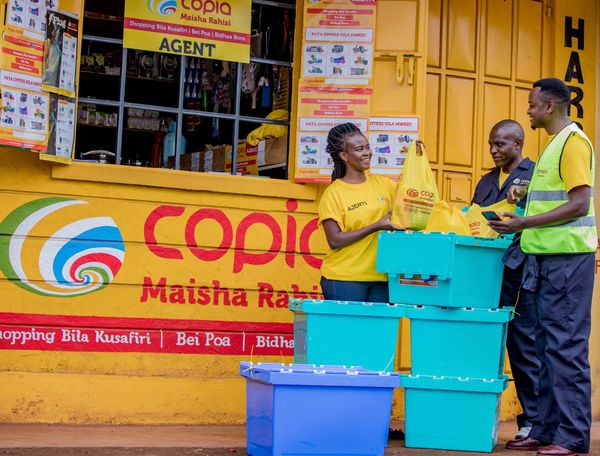
NAIROBI — The formal collapse and liquidation of Kenyan e-commerce platform Copia Global, following its entry into administration after raising more than $123 million (KES 15.8 billion) in institutional capital, marks one of the most significant venture-backed insolvencies in Sub-Saharan Africa.
Founded in 2013, the company sought to solve last-mile logistics for underserved, middle-to-low-income consumers in rural and peri-urban markets across Kenya and Uganda. Despite building an expansive network of over 50,000 local commercial agents and serving millions of customers, Copia succumbed to mounting operational debts and an inability to secure follow-on equity financing during a severe venture capital downturn.
High Burn Rates and Last-Mile Friction
Copia’s business model relied on a hybrid agent network, appointing small neighborhood shopkeepers to act as order-and-pickup points. While this strategy successfully bypassed traditional address system limitations and digital payment barriers, it required massive capital expenditure to maintain centralized warehousing, fleet inventory, and agent commission structures.
Operational complexities in remote geographies severely depressed unit economics. High fuel costs, currency depreciation, and inflationary pressures on basic consumer goods continually squeezed margins. Attempts to stem cash burn—including the closure of its Ugandan subsidiary, staff retrenchments, and operational scale-backs—proved insufficient to offset the platform's fixed-cost base.
A Broader Shift in Venture Capital Strategy
Copia's liquidation aligns with a wider repricing of tech-enabled logistics across the continent. Capital-heavy distribution platforms have faced severe down-rounds, forced mergers, or total asset sales as investors pivoted away from top-line growth in favor of immediate unit profitability.
Administrators overseeing Copia’s wind-down have proceeded with asset sales, including logistics infrastructure, vehicle fleets, and real estate equipment, to satisfy outstanding creditor claims. Analysts view the exit as a definitive signal that African retail tech must prioritize localized capital efficiency over aggressive, equity-fueled expansion.
The Intelligence Engine for African Private Capital
Access complete transaction breakdowns, fund strategy updates, and market commentary directly on our platform.
Written by
Read next
Egypt’s First Fintech Unicorn MNT-Halan Files to List 20% Stake in $1.4 Billion Cairo IPO
Parent entity MNT Tech Holding plans to float 320 million shares on the Egyptian Exchange, testing international institutional appetite for North Africa's largest non-bank lending platform.
Bannerman Energy Completes $457 Million Strategic Financing with CNOL to Fund Etango Uranium Project
Australian uranium developer Bannerman Energy secures $456.8 million from CNNC Overseas to fund debt-free construction of the Etango project in Namibia, establishing an incorporated joint venture alongside the One Economy Foundation.
Kenyan Supermarket Chain Quickmart Prepares for Landmark 57.5% Stake Sale via Nairobi Securities Exchange
Leading East African retailer Quickmart targets a major public float, as private equity backer Adenia Partners and founding shareholders weigh a secondary divestment of up to a 57.5% equity interest on the Nairobi Securities Exchange.
Vatar Closes $500,000 Angel Round at $10M Valuation Following Viral Launch of Lagos Life
The parent company of the fast-growing multiplayer browser game secures rapid funding in a single day as player traffic surpasses five million users nine days after debut.
East Africa Foods Secures $40 Million to Expand Regional Agritech Supply Chain
The Dar es Salaam-headquartered food distribution company completes a $26 million Series B equity round co-led by PIDG’s InfraCo, Oikocredit, and FMO to scale post-harvest logistics infrastructure across East Africa.
South African Travel Tech Platform LekkeSlaap Acquired by Investor Consortium as Founders Exit
Bellair Road Investment Partners, Janic Capital, family offices, and Investec back CEO Frans Joubert and the executive team to drive technology investment and regional expansion across Southern Africa.