

Copia Global’s $123 Million Insolvency Highlights Capital Realities in African E-Commerce
The failure and liquidation of Kenya’s agent-led retail pioneer mark one of East Africa’s largest tech collapses, signaling a decisive shift away from capital-intensive last-mile distribution models.
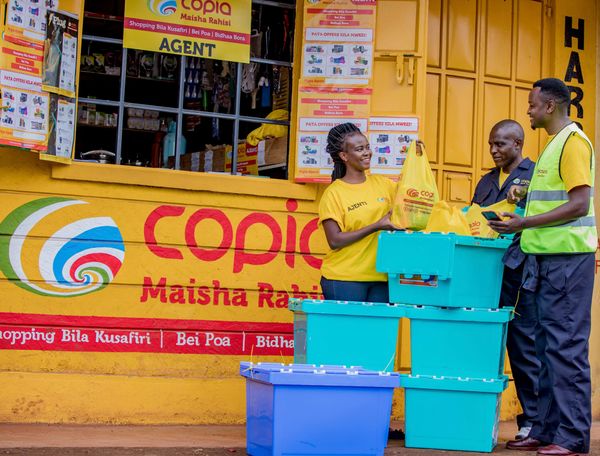
NAIROBI — The formal collapse and liquidation of Kenyan e-commerce platform Copia Global, following its entry into administration after raising more than $123 million (KES 15.8 billion) in institutional capital, marks one of the most significant venture-backed insolvencies in Sub-Saharan Africa.
Founded in 2013, the company sought to solve last-mile logistics for underserved, middle-to-low-income consumers in rural and peri-urban markets across Kenya and Uganda. Despite building an expansive network of over 50,000 local commercial agents and serving millions of customers, Copia succumbed to mounting operational debts and an inability to secure follow-on equity financing during a severe venture capital downturn.
High Burn Rates and Last-Mile Friction
Copia’s business model relied on a hybrid agent network, appointing small neighborhood shopkeepers to act as order-and-pickup points. While this strategy successfully bypassed traditional address system limitations and digital payment barriers, it required massive capital expenditure to maintain centralized warehousing, fleet inventory, and agent commission structures.
Operational complexities in remote geographies severely depressed unit economics. High fuel costs, currency depreciation, and inflationary pressures on basic consumer goods continually squeezed margins. Attempts to stem cash burn—including the closure of its Ugandan subsidiary, staff retrenchments, and operational scale-backs—proved insufficient to offset the platform's fixed-cost base.
A Broader Shift in Venture Capital Strategy
Copia's liquidation aligns with a wider repricing of tech-enabled logistics across the continent. Capital-heavy distribution platforms have faced severe down-rounds, forced mergers, or total asset sales as investors pivoted away from top-line growth in favor of immediate unit profitability.
Administrators overseeing Copia’s wind-down have proceeded with asset sales, including logistics infrastructure, vehicle fleets, and real estate equipment, to satisfy outstanding creditor claims. Analysts view the exit as a definitive signal that African retail tech must prioritize localized capital efficiency over aggressive, equity-fueled expansion.
The Intelligence Engine for African Private Capital
Access complete transaction breakdowns, fund strategy updates, and market commentary directly on our platform.
Written by
Read next
Continental Considers Discontinuing Tire Production at Its Gqeberha Plant in South Africa
The German tyre maker initiates a Section 189A consultation putting roughly 950 jobs at risk, following prior Eastern Cape manufacturing exits.
Engen-Led Consortium Details R40 Billion Integrated LNG-to-Power Project in Durban
Engen, VTTI, Vitol, and ACWA advance plans for a 1.9 GW gas-to-power plant and LNG import terminal in KwaZulu-Natal, targeting operations in the second half of 2031.
AgTech Startup Crop Cura Launches Operations in Rwanda
Registered with the Rwanda Development Board, Crop Cura Rwanda Limited rolls out digital agronomy and field-mapping infrastructure to connect over 10,000 smallholder farmers with lenders and insurers.
Axmed Secures $4.28 Million From the Gates Foundation to Expand Retail Pharmacy Procurement in Kenya and Nigeria
The healthcare procurement platform deploys $2.28 million to launch Axmed Retail for Kenyan pharmacies and $2 million for family planning procurement in Nigeria.
Continental Considers Discontinuing Tire Production at Its Gqeberha Plant in South Africa
The German tyre maker initiates a Section 189A consultation putting roughly 950 jobs at risk, following prior Eastern Cape manufacturing exits.
Cloud9 Acquires Canadian Money Services Business Monix Pay
The digital bank for African consumers and businesses gains a FINTRAC-registered Canadian subsidiary to connect cross-border commerce with fewer intermediaries.