

Kenya High Court Voids Vodacom’s $1.6B Safaricom Stake Acquisition, Ordering Shares Returned to State
A three-judge bench strikes down the controversial cross-border transaction, ruling that the government’s divestiture of a strategic national asset violated public participation laws and constitutional thresholds.
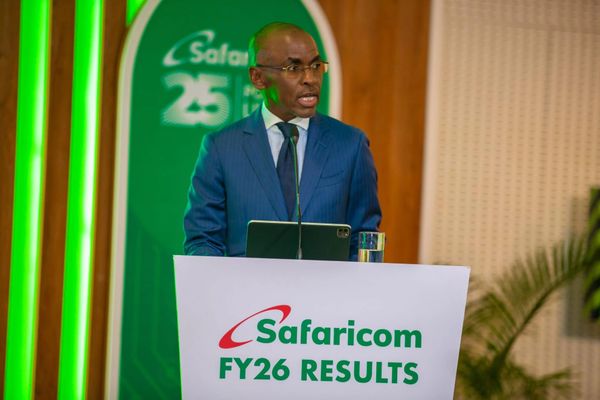
NAIROBI — Kenya’s High Court has delivered a landmark regulatory blow to regional telecommunications consolidation, declaring the government’s sale of a 15% state stake in Safaricom Plc to South Africa’s Vodacom Group unconstitutional, null, and void.
The ruling, handed down by a three-judge bench comprising Justices Francis Gikonyo, Roselyne Aburili, and Tabitha Ouya, orders the complete unwinding of the transaction and the immediate restoration of the shares to the Republic of Kenya.
Anatomy of a Blocked Takeover
The high-stakes transaction, initially inked in December 2025, saw Vodacom agree to acquire an additional 15% stake from the Kenyan Treasury for approximately KES 204.3 billion ($1.6 billion), alongside a KES 40.2 billion monetization pact for future dividend rights. The deal would have elevated Vodacom’s majority shareholding in East Africa’s most valuable listed company from nearly 40% to roughly 55%, reducing the Kenyan state's direct holdings to 20%.
However, the bench ruled that the execution process breached core governance statutes:
- Lack of Public Participation: The court found that the privatization of a critical public asset failed to meet mandatory constitutional thresholds for open civic engagement and legislative oversight.
- Non-Transparent Procurement: Key transaction instruments, including the primary share-purchase agreement and dividend rights pact, were withheld from public scrutiny, while the state failed to justify bypassing a competitive bidding process.
- National Security and Control: The judges noted that the unnotified transfer of effective operational control to a foreign entity compromised strategic national interests without proper regulatory exemptions or clearance from the Competition Authority of Kenya.
"The divestiture in question was undertaken and procured in contravention of the constitution and the law," the bench stated in its ruling. "The 15% shares are hereby restored to the government of Kenya."
Financial and Sovereign Fallout
The judicial intervention throws President William Ruto’s broader state asset divestment program into deep uncertainty. The administration has relied on strategic privatisations to help fund a sprawling $39 billion infrastructure pipeline aimed at unlocking economic growth.
With the court ordering the transaction reversed, the cash-strapped Kenyan Treasury faces complex legal and financial liabilities regarding the potential refund of approximately $1.9 billion already processed through the sale. Meanwhile, market reaction was swift: Vodacom shares dipped nearly 4% on the Johannesburg Stock Exchange following the news, while Safaricom shares climbed 2.2% on the Nairobi Securities Exchange.
The Intelligence Engine for African Private Capital
Access complete transaction breakdowns, fund strategy updates, and market commentary directly on our platform.
Written by
Read next

Pepkor Sells 65% Logistics Stake For $140M To RMB-Backed IronOak
South African retail giant Pepkor unlocks R2.25 billion in capital through a strategic sale-and-leaseback transaction, offloading majority control of core distribution infrastructure while retaining a minority holding.
Pigee Acquires 55% Controlling Stake in ShipAfrica to Accelerate West African Expansion
The cross-border logistics-tech acquisition highlights an accelerating M&A trend as foreign platforms leverage local infrastructure and carrier networks to scale across the continent.
Nigerian Credit Infrastructure Startup CreditChek Acquires Ugandan Core Banking Provider Algosys to Accelerate East African Expansion
The strategic acquisition combines Algosys’s core banking and loan management technology with CreditChek’s credit, income, and identity intelligence to build full-stack lending infrastructure across Africa.
VEA Capital Partners Acquires Stake In South African Data Science Firm Bonisa AI
The private investment arm of VEA Group backs the artificial intelligence and analytics specialist to accelerate enterprise expansion, commercialize decisioning-as-a-service, and scale advanced credit modeling across African markets.
BlueOrchard Climate Action Mobilisation Fund Reaches First Close With $250M
The Schroders-backed impact investor secures significant institutional capital for its flagship blended finance vehicle, creating an investment-grade path for private deployment into emerging and frontier climate strategies.
Pepkor Sells 65% Logistics Stake For $140M To RMB-Backed IronOak
South African retail giant Pepkor unlocks R2.25 billion in capital through a strategic sale-and-leaseback transaction, offloading majority control of core distribution infrastructure while retaining a minority holding.