

Twiga Foods Enters Administration as $35 Million Rescue Package Falls Short
East Africa's premier B2B retail distribution platform yields to mounting debt and structural pressures after raising over $185 million across its lifetime.
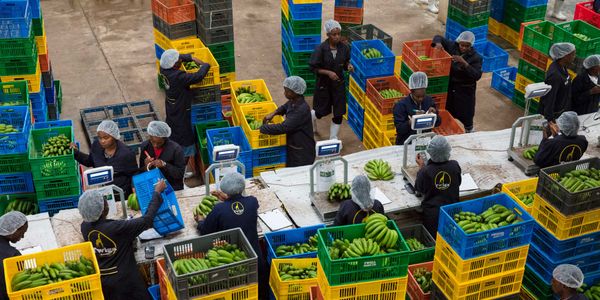
NAIROBI — Kenyan business-to-business (B2B) agricultural and retail distribution platform Twiga Foods has officially entered statutory administration. Legal notices confirmed that GT Flow Limited (formerly Twiga Foods One Limited) was placed under administration on August 17, 2026, handing control of its assets and management to appointed administrator Mohamed Mohamed.
The move marks a definitive tipping point for one of East Africa’s most heavily funded startups, which accumulated approximately $185.4 million in total venture backing since its inception in 2014.
The Anatomy of a Collapse
Founded to disintermediate fragmented supply chains by connecting farmers directly with urban kiosks and informal retail stalls ("dukas"), Twiga scaled rapidly across Kenya and briefly into Uganda. However, the cash-intensive mechanics of managing warehouse fleets, handling perishable goods, and extending trade credit created severe margin pressures.
By late 2023, mounting vendor debts and a drying venture capital market pushed the company to the brink. Twiga secured a vital $35 million convertible bond and debt financing lifeline in December 2023 from a consortium of backers, including Creadev and Juven (indirectly backed by Auchan’s founding family, AFM), supplemented by personal capital from co-founder Peter Njonjo.
Restructuring Failures and Asset Overhauls
Despite the injection of capital, the lifeline proved insufficient to achieve structural profitability. Njonjo stepped down from day-to-day operations in early 2024, handing the chief executive role to former Jumia executive Charles Ballard, who instituted deep workforce reductions and tried pivoting the company toward an asset-light model.
In 2025, Twiga acquired majority stakes in regional distributors, including Jumra, Sojpar, and Raisons, in an effort to stabilize its supply chain architecture. Yet, legacy liabilities persisted. Creditor pressure intensified through early 2026, culminating in High Court petitions for the liquidation of affiliated entities such as Twiga Tatu SEZ Limited over unpaid obligations.
With the administrator now in control, creditors have been given a 30-day window to formally file claims, signaling a sobering chapter for East Africa's tech and retail distribution ecosystem.
The Intelligence Engine for African Private Capital
Access complete transaction breakdowns, fund strategy updates, and market commentary directly on our platform.
Written by
Read next
BlueOrchard Climate Action Mobilisation Fund Reaches First Close With $250M
The Schroders-backed impact investor secures significant institutional capital for its flagship blended finance vehicle, creating an investment-grade path for private deployment into emerging and frontier climate strategies.
Sahel Capital’s SEFAA Deploys $650K to Noma Services to Scale Nigerian Commodity Aggregation
Backed by KfW Development Bank, the Social Enterprise Fund for Agriculture in Africa channels structured debt into Abuja-headquartered Noma to expand staple crop supply chains.
Nimba Mining Finalizes $300 Million Glencore Pre-Financing Deal to Accelerate Strategic Mineral Assets
The strategic agreement locks in multi-hundred-million-dollar trade-backed liquidity and guarantees off-take channels for up to 60 million tonnes of Guinean bauxite.
VEA Capital Partners Acquires Stake In South African Data Science Firm Bonisa AI
The private investment arm of VEA Group backs the artificial intelligence and analytics specialist to accelerate enterprise expansion, commercialize decisioning-as-a-service, and scale advanced credit modeling across African markets.
BlueOrchard Climate Action Mobilisation Fund Reaches First Close With $250M
The Schroders-backed impact investor secures significant institutional capital for its flagship blended finance vehicle, creating an investment-grade path for private deployment into emerging and frontier climate strategies.
Pepkor Sells 65% Logistics Stake For $140M To RMB-Backed IronOak
South African retail giant Pepkor unlocks R2.25 billion in capital through a strategic sale-and-leaseback transaction, offloading majority control of core distribution infrastructure while retaining a minority holding.